







Multi-camera inspection
Multiple cameras cover all sides of the orange, so surface issues aren't missed by relying on one view.
Accreditations









Case Study
An automated orange inspection and sorting system using image processing and multiple cameras to grade fruit by colour and surface characteristics. Oranges move individually along a conveyor while multiple cameras cover every side; a processor-based board detects blemishes and yellow/green/dark areas, classifies each orange (good, bad, unripe, over-ripe) and diverts it to the respective container.
Industry
Agriculture
Region
EU
Agriculture / Image Processing / Automation
The project focuses on developing an automated system that detects the grade and quality of oranges based on their colour and visible surface characteristics. Image processing identifies blemishes, yellow areas, green areas and dark areas; based on the detected characteristics, oranges are separated by quality and sent to their respective containers. The solution is designed for faster automated processing and uses multiple cameras to cover all sides of an orange.
Business requirements & challenges
The system had to grade oranges by colour, on purpose-built hardware, and sort them automatically at speed — while seeing every side of the fruit.
Key requirements
Major challenges
Solution
A conveyor-belt system moves oranges through the inspection area one by one, multiple cameras cover all sides of each fruit, and a processor-based board implements the algorithm and improves image-processing results — detecting blemishes and yellow, green and dark areas.
Stack
How it works
What's new
Multiple cameras cover all sides of the orange, so surface issues aren't missed by relying on one view.
Determines quality from the orange's colour and visible surface characteristics.
Detects blemishes and yellow, green and dark areas across the fruit surface.
Classifies each orange as good, bad, unripe or over-ripe.
A dedicated processor-based board implements the algorithm and improves image-processing performance.
Each orange is automatically directed to its respective container.
Business benefits
At a glance
| Region | Spain |
|---|---|
| Primary Objective | Automated orange quality grading & sorting |
| Quality Parameter | Colour + visible surface characteristics |
| Detection | Blemish, yellow, green, dark areas |
| Classification | Good, bad, unripe, over-ripe |
| Input | Camera images |
| Camera Setup | Multiple cameras |
| Coverage | All sides of orange |
| Feeding System | Conveyor belt |
| Processing | Processor-based board |
| Output | Respective container |
| Future Improvement | High-end processor + optimised algorithm + better camera |
| Business Value | Accuracy, efficiency, revenue opportunity, reduced labour cost |
Related
Agriculture
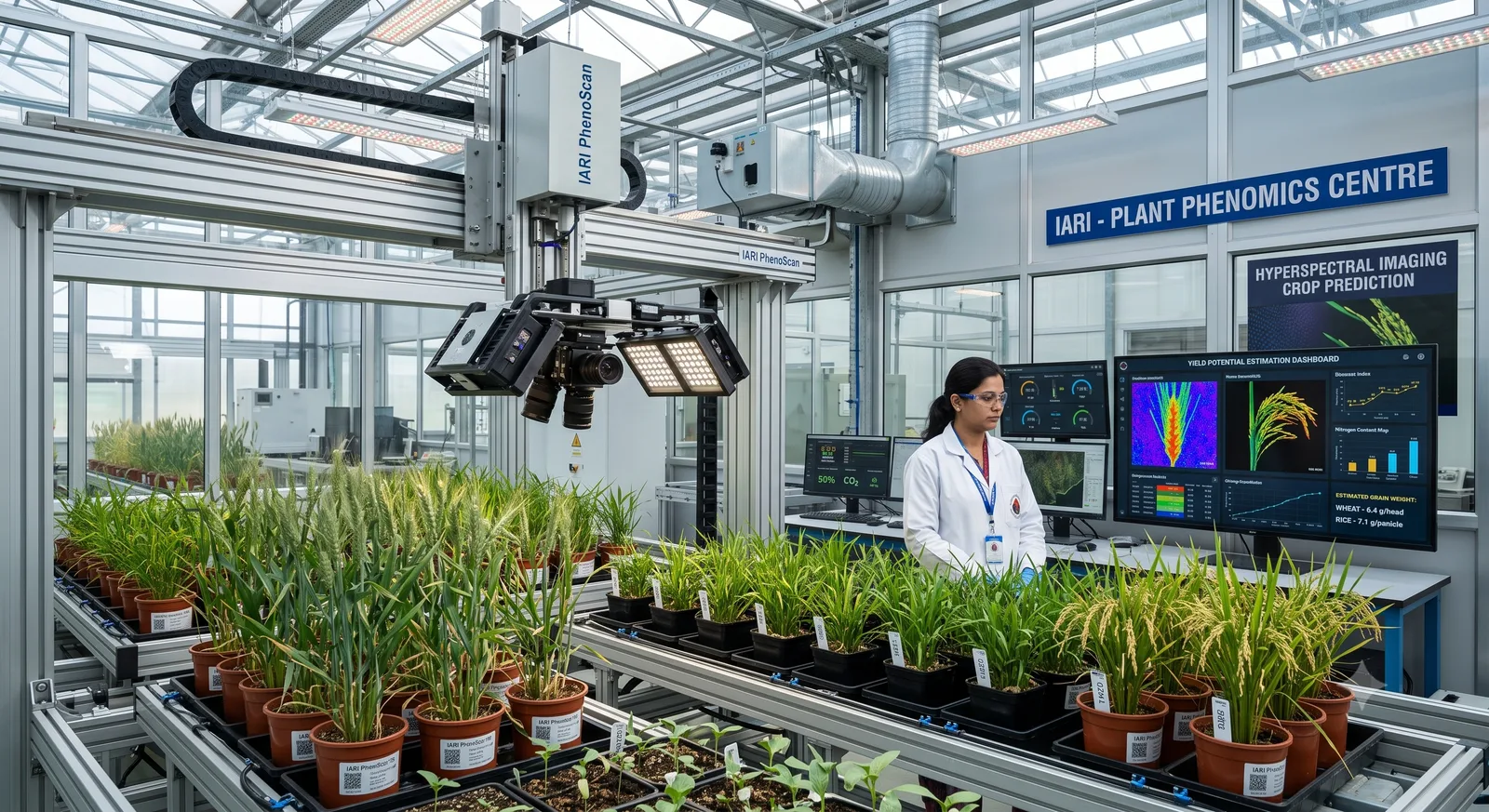
FeaturedHyperspectral image processing at the Plant Phenomics Centre, IARI — enabling accurate, early-stage, non-destructive crop-yield estimation for wheat and rice by correlating spectral signatures (photosynthetic efficiency, chlorophyll, water stress) with final yield.
Plant Phenomics Centre, IARI
IN
Agriculture
A comprehensive AI-based image-processing framework at the Plant Phenomics Centre, IARI — integrating RGB, hyperspectral and NIR imaging across controlled and field environments to assess wheat and rice traits: biomass, near real-time disease detection and scoring, nitrogen and water-level classification, NDVI soil-vegetation segmentation and trait-specific spectral analysis, feeding the AgriX decision-support tools.
Plant Phenomics Centre, IARI
IN
Agri & Manufacturing
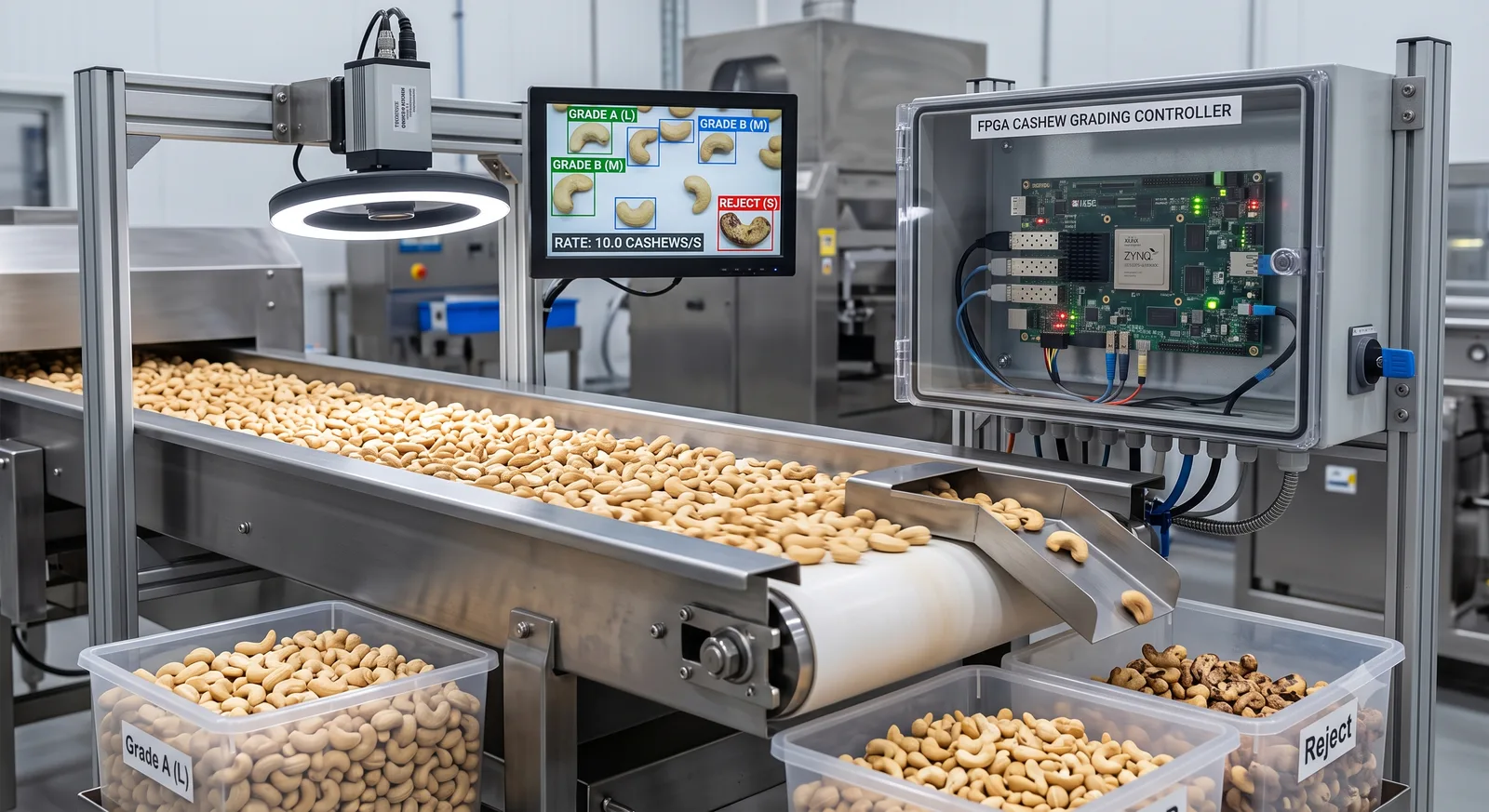
An automated cashew-grading system that uses machine learning and image processing to grade cashews by size and identify bad-quality nuts. A conveyor belt positions one cashew per camera frame while a custom FPGA-based board processes images and grades at ~10 cashews/second, automatically diverting each nut to its respective container.
Indian Cashew Processing Industry
IN