






FPGA-based processing
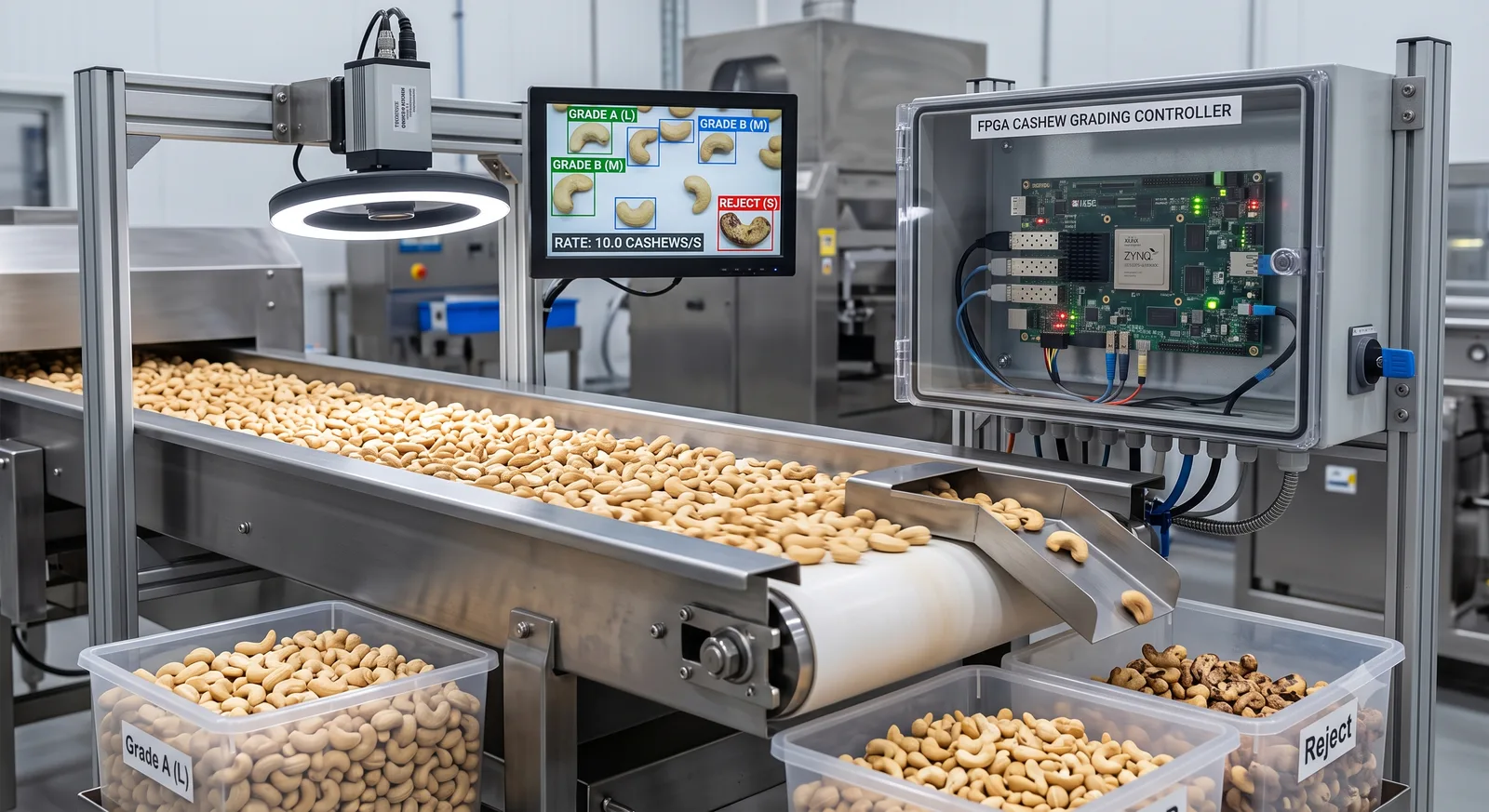
A custom FPGA board implements the grading algorithm — where traditional processors struggled to hit 10 cashews/second.
Accreditations









Case Study · Indian Cashew Processing Industry
An automated cashew-grading system that uses machine learning and image processing to grade cashews by size and identify bad-quality nuts. A conveyor belt positions one cashew per camera frame while a custom FPGA-based board processes images and grades at ~10 cashews/second, automatically diverting each nut to its respective container.
Industry
Agri & Manufacturing
Region
IN
Year
2022
Agri / Manufacturing / Machine Learning / Image Processing
The project involves developing an automated system that detects the grade of cashews based on their size and identifies/removes bad-quality cashews using image processing. It combines image processing, machine learning, a camera interface, conveyor-belt automation and FPGA-based processing — automating the grading process and making it fast enough for industrial-scale throughput.
Business requirements & challenges
The system had to grade and sort cashews automatically, on purpose-built hardware, at industrial speed.
Key requirements
Major challenges
Solution
A conveyor-belt-based system feeds cashews one by one into the camera frame, and a custom FPGA-based board hosts the grading algorithm — making processing easier, faster and fast enough for the target throughput. A machine-learning component independently makes the grading decision, and each cashew is diverted to the correct container.
Stack
How it works
What's new
A custom FPGA board implements the grading algorithm — where traditional processors struggled to hit 10 cashews/second.
The conveyor is arranged so only one cashew appears in the camera frame at a time, simplifying grading.
A machine-learning component independently determines each cashew's grade.
Dedicated camera interface logic connects the camera to the processing hardware.
Sustains ~10 cashews per second, sufficient for industrial-scale throughput.
Each graded cashew is automatically diverted to its respective container.
Business benefits
At a glance
| Region | India |
|---|---|
| Primary Objective | Automated cashew grading |
| Quality Check | Bad-quality cashew detection |
| Grading Parameter | Size |
| Core Technology | Machine Learning + Image Processing |
| Hardware | FPGA-Based Board |
| Input | Camera image |
| Feeding System | Conveyor Belt |
| Camera Requirement | One cashew per frame |
| Processing Speed | 10 cashews/sec |
| Output | Respective container based on grade |
| Future Improvement | Optimised algorithm + better camera |
| Business Value | Accuracy, efficiency, revenue generation, reduced labour cost |
Related
Manufacturing
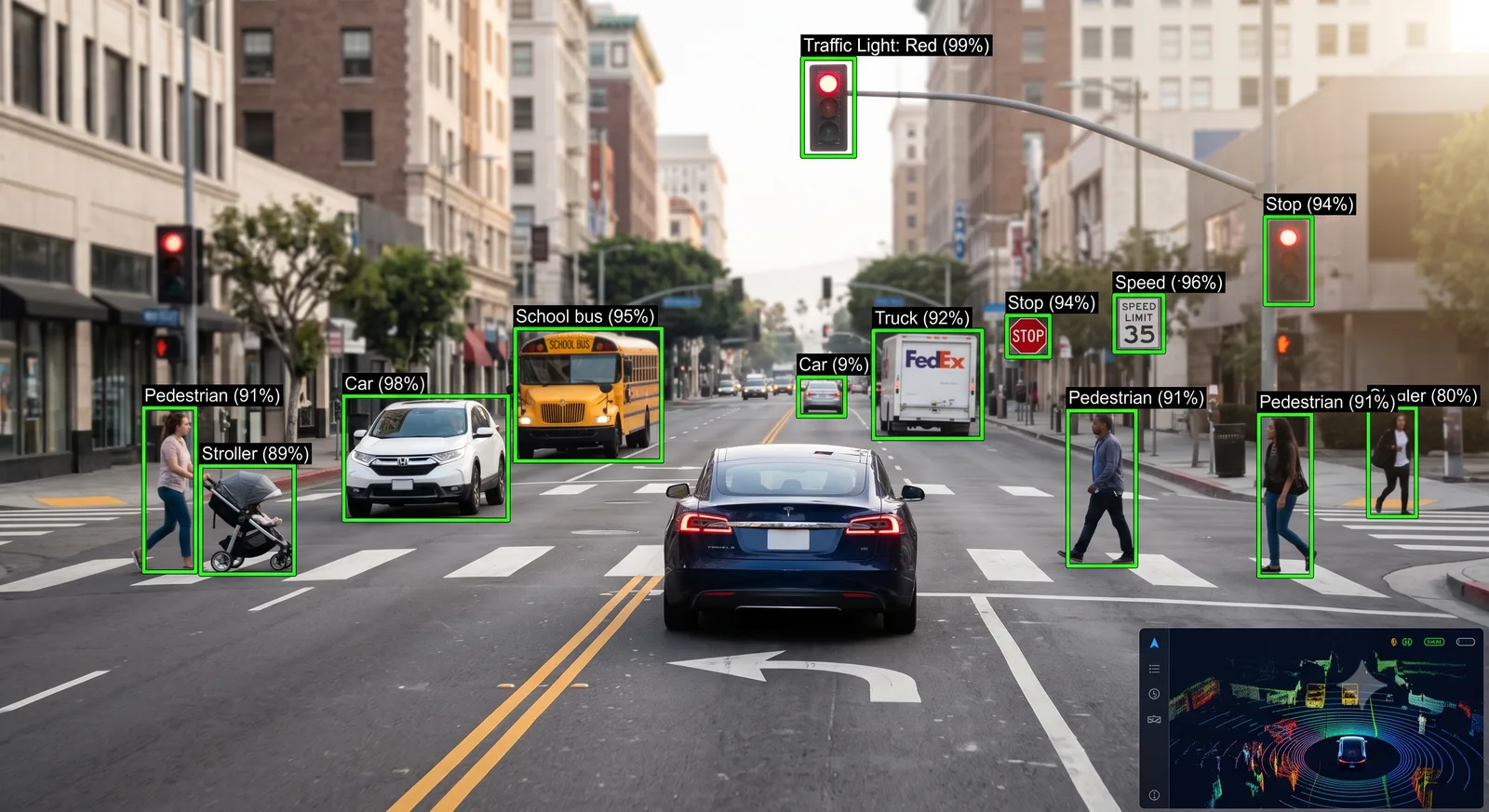
A real-time multi-object detection and classification system for autonomous vehicles — identifying road objects from live video and feeding them to the vehicle's decision system for safe self-driving.
US-based Self-Drive Vehicle Programme
US
Manufacturing
A Salesforce CPQ (Configure, Price, Quote) implementation for a global Machines & Spare Parts Manufacturing company already on Salesforce Sales Cloud — standardising pricing, discounting, quoting, approvals, ordering and the full quote-to-cash process. Replacing error-prone Excel quoting and untracked discount approvals with configured CPQ templates, product-compatibility rules, exception approval workflows, a 45% markup price rule, order creation from both Quote and Opportunity, and quote-PDF generation. Quote creation and approval time dropped to one tenth, errors to under 2%, and the client's internal team became able to generate quotes themselves.
Global machines & spare parts manufacturer
1/10
quote creation + approval time